
The First Birth
Part One: The Woman Who Knew Too Much


My sincerest apologies to friends who thought I would be writing about art criticism or the environment or theological matters. Instead I’ve turned to recalling the first time a baby came out of me. I’m past 20 weeks pregnant with my second child and hope the story of my first birth can be illuminating for anyone who is about to go through the same thing or is processing a previous delivery. I happen to love birth stories of all stripes and think this one is particularly wild. So enjoy, or read this highly subjective recollection at your own risk. This is the first of two parts, as this is a longer tale than I expected to tell.
“[Writing] about motherhood is of no real interest to anyone except other mothers; and even then only mothers who, like me, find the experience so momentous that reading about it has a strangely narcotic effect.” - Rachel Cusk, A Life’s Work
* * * * * * *
A few days before giving birth to my first child in November of 2023, I waddled in from the bitter Montana cold into my last acupuncture appointment, vibrating with sheer nervousness and anticipation of what could happen at any moment (a human baby expelling itself from my body). I was just about 40 weeks pregnant. My acupuncturist, a well-meaning white lady1 whose own mother was a nurse midwife, matter of factly stuck me with some needles and left me to “decompress.” She, let’s call her Hannah, was by no means a Chinese medicine doctor, let alone a particularly gifted acupuncturist, but even mediocre acupuncture is usually better than nothing. That morning, however, I was so on edge about the impending birth that whatever series of needles I got actually did nothing at all to relax me. In fact, Hannah felt my pulse after pulling the sharps out and was concerned enough to take my blood pressure with the electronic arm cuff sitting on her desk.
At the time I didn’t know enough about Chinese medicine or pulse diagnosis to understand why on earth any acupuncturist would ever need a blood pressure cuff in the first place, but that’s probably what I deserved for being so ignorant of the ancient and highly advanced healing modality I was toying with like a hobby horse in the first place. “Hmm,” she said with a furrowed brow, “you should call your midwife and get evaluated for possible pre-eclampsia. This is concerning. I’ll write down the numbers for her in case you forget.” This diagnosis sent me, a well-seasoned hypochondriac, into a psychological tailspin and I broke down in tears on the way home. Until then, I had kept the anxiety under control with a daily transcendental meditation practice (which I still swear by), but it’s pretty standard to have a big release of intense emotions before going into labor.
I texted my midwife, who told me the solution to my “high blood pressure” was an epsom salt bath and a nap. She wasn’t worried. “It’s not pre-e. It’s a first time young mother watching her maiden body disintegrate into the ethers to make room for her baby. And of course Hannah would misdiagnose you with it, her mom is a nurse midwife.” (For those of you not familiar with the hierarchy of “real” midwifery, very often nurse midwives are considered no better than OBs, if not worse, because they are educated primarily in the hospital birth system and if they work in a hospital setting, which they very often do, they are still below obstetricians on the totem pole and usually default to the same medicalized labor and delivery procedures they are supposedly trying to avoid: pushing flat on a bed, epidurals, over-medication, continuous electronic fetal monitoring etc.)
A few weeks before, my husband and I had temporarily moved into an Airbnb in Missoula, Montana for my home birth (no, the landlady, an angel, did not know I planned on having the baby in her actual house). My midwife, the only one in the state I really respected at that time, also lived in Missoula and was not attending births far out of town. Our hometown’s tiny hospital was by no means equipped with any competent OBs in case of complication, and was affectionately referred to by many townsfolk as “the morgue.” In fact, while I was pregnant a young first-time mother was airlifted to Salt Lake City after literally almost dying of sepsis from a botched C-section there.
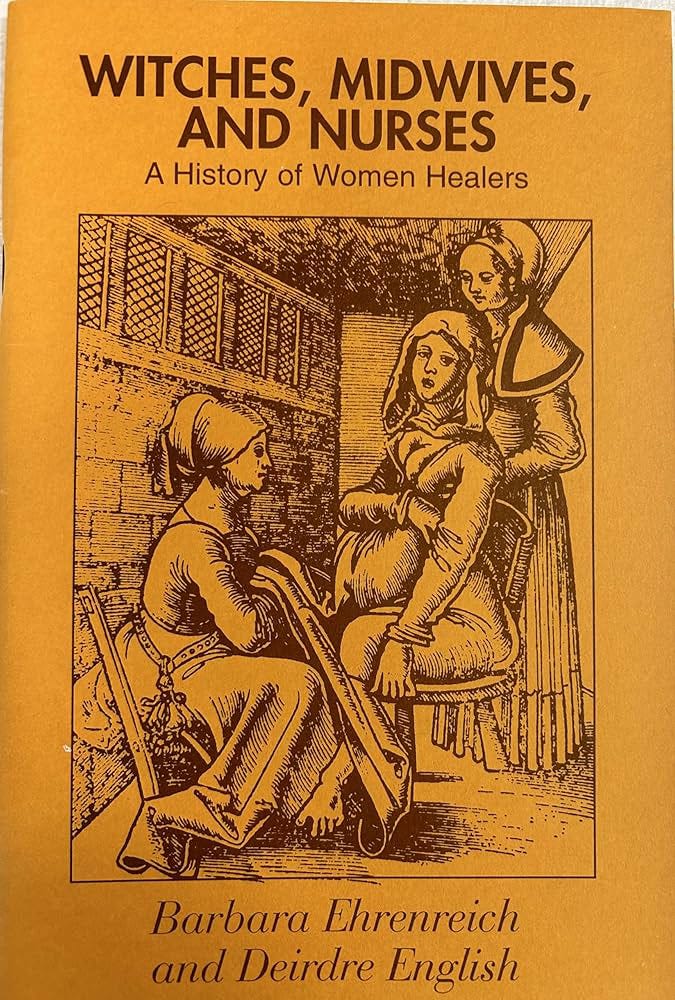
Home birth midwifery fascinated me for years before getting pregnant, after attending the birth center emergence of a friend’s third baby when I was 22. As an undergrad I conducted long research projects on the history of obstetrics and even published an academic paper on the history of reproductive technology. I loved the history of drugs and so naturally obstetric anesthesia and anti-hemorrhage medications drew me in as subjects to chew on artistically and academically. I could never forget reading Ina May Gaskin’s Spiritual Midwifery for the first time, or Barbara Ehrenreich’s essay “Witches, Midwives and Nurses.” I was pretty radicalized by the abysmal state of biomedical obstetrics from a young age and knew that one day I would not give birth in a hospital unless it was a true emergency.
After fleeing NYC during the pandemic, I attended home births in Montana as a midwife assistant and strongly considered attending midwifery school. I found the stories of masked women forced to birth alone without their partners in the hospital horrific and quite literally evil, especially when the babies were forcibly quarantined. Home births actually lowered risk of invasive procedures and complications for healthy women. I was thrilled to help other mothers welcome their babies in peace, but despite finding a midwife to shadow who was intellectually on the same page as me, I still have a hawkish penchant for pattern recognition. I began to notice little things that began to bother me at many home births, especially first births.
Midwives seemed to be almost totally preoccupied with the idea of a lot of mothers getting “cervical lips” when they were 9 centimeters dilated. The solution to this problem was to stick a gloved hand deep inside the laboring woman’s vagina and manually push aside the last bit of undilated cervix, or the “lip,” to make room for baby to come through; this was usually followed by excruciating screams from the mother. It was a nightmare to watch and I witnessed it on many occasions. Furthermore, after researching actual medical studies on the subject, the excuse given by midwives, OBs and nurses to move the “lip” aside before letting mothers push to avoid “cervical swelling” was not evidence-based at all, but usually the result of a provider growing tired or impatient, especially after attending the marathon of a mother’s first labor, which can last for DAYS. A true cervical lip that causes complications for mother and/ or baby is exceedingly rare.
Swelling and labor complications following from it almost never occur with spontaneous, uncontrolled pushing with a “cervical lip.” The animal noises and out of control bearing down that happens to a mother when the baby starts to move down into the birth canal from the uterus is spontaneous pushing, not the forced pushing you see with epidural-numbed or coached births on a bed, which could very well cause cervical swelling. I brought this up with the midwife I chose to work with for my pregnancy. She scoffed, chalking the practice up to the same factors I did: impatience and incompetence. She assured me this never happened in her practice because she trusted women’s bodies and the process of natural labor.
Another odd thing I kept seeing while attending births was a lot of agonized screaming when mothers were put on the dreaded birth stool, a wooden horseshoe looking toilet seat thing I now associate with medieval torture devices. There is always, of course, a time and a place for almost everything under the sun when it comes to birth, even forceps and these birth stools, which have been around for eons. But, once again, I saw them pulled out like a threat to first time mothers not laboring fast enough for the midwife many times. These tools can be useful for helping the baby move down the pelvis effectively, but actually crowning or delivering the baby on them places undue tension on the perineum and pelvic floor, increasing the risk of bad tearing and vaginal or bladder prolapse. Awful! Nobody wants that!


Finally, I witnessed a litany of routinized cervical checks at home births you would expect to see in a bad hospital delivery. I can’t tell you how many friends I have who said the most painful part of birth was someone constantly sticking an entire hand up their vagina to determine how open their cervix was. The normalcy of such a bizarre practice has always disturbed me on many levels. First of all, it’s an established fact that the more cervical checks are conducted, the higher the risk of uterine infections and sepsis, since you are introducing outside germs into an microbially delicate environment (to put it lightly). There’s a reason why medical professionals are supposed to avoid any unnecessary vaginal exams after the water/ amniotic sac has broken, because the risk of infection rises substantially.
Secondly, it’s invasive, usually painful, and medically unnecessary most of the time. The only thing most of these cervical checks do is give the provider a convenient snapshot in time of how dilated a mother is, often leading to hopelessness in the laboring woman that she is not going fast enough, or making her think that she will be in labor literally forever. What they usually don’t say is that a woman could be 4 centimeters dilated but pushing the baby out 30 minutes later, or stuck at 8 cm for hours. Still, this practice pushes blithely on, despite a mountain of research that they are not medically useful and can cause other problems. To be clear: I am not referring to medically necessary cervical checks to rule out serious suspected conditions like cord prolapse.
Some women do tolerate these routine vaginal explorations without any visceral response and even ask for one to see how far along they are in labor, but I knew long before giving birth that I would never be one of them. When Hannah, my ever-insightful acupuncturist asked me at 36 weeks pregnant what I was most nervous about before labor and I responded “cervical checks,” she essentially told me I needed to work out my sexual trauma before giving birth because there was nothing wrong with a stranger forcefully digging around deep inside me with their fingers. It was during this acupuncture appointment when a sneaking suspicion arose that I was living in crazy town.
When I was 39 weeks pregnant my husband was scheduled to leave for two days to guest lecture and present his recent film at Harvard Divinity School. It was an opportunity that he should not miss, and there was no way I could fly in my present condition. Of course I didn’t want to have the baby while he was gone, but tried to remember that most first-time mothers usually don’t give birth until at least 41 weeks. My midwife’s solution to our dilemma was to come over and conduct a cervical check, just to make sure I wasn’t too dilated before he left.
My stomach dropped and I was more than a little annoyed, mostly because I thought it was kind of a retarded suggestion. I could go from one to five centimeters at any moment after the exam, or from zero to a ten the next day while he was gone. I remember expressing months before to the midwife that I didn’t want any unnecessary checks, and she just smiled and sighed and said, “nobody likes them, but it’s not a big deal and there’s usually just a couple.” None of this inspired confidence. I tried to ignore the nagging voice in my head that said this situation was not good by cooking complex dinners and learning how to use pastel pencils. My husband kept telling me I needed to discuss my issues with cervical checks with the midwife before the birth to avoid any drama during labor, but I felt stuck and incapable of protesting. She was the expert elder midwife and I was probably being histrionic. If my acupuncturist was actually worth her salt she would have unblocked this energy for me, but it’s pointless to assign blame to anyone now except myself! I said nothing.
My midwife came over the night before my husband left for Boston. I laid down on the Airbnb bed and she conducted the internal exam with a latex glove and petroleum jelly. My husband winced with me in calm sympathy. All the cervical checks I had witnessed before flashed before my eyes and I definitely felt a little sick afterward. “One centimeter dilated and fifty percent effaced,” she chirped, pulling her glove off with a snapping sound. “He’s free to go tomorrow.” After she left the house I went to the bathroom to pee, and shuddered at the sight of a white latex glove and opened pouch of medical jelly discarded in the small trash bin. I should have planned for a free birth, I thought.
My advice to you if you are about to give birth: Do not be like me! Gather enough self respect to make sure you are crystal clear with what you find tolerable or intolerable, and say it clearly. If your provider cannot accept what you need, fire them and plan for something else. There is always a solution. It may be difficult, but God truly does help those who help themselves, and nature rewards courage. Clear communication is also a crucial skill in parenting and marriage, so learn it now.
I know for a fact that white people can make excellent acupuncturists and Chinese medicine doctors, but a good acupuncturist is hard to find, and the white, subpar ones are legion. I will say that my current OMD in Reno is one of the most gifted healers I have ever met, but he actually worked and studied in China and always jokes: “Yeah I’m Asian, caucasian!”
I agree with so much of this!! I have a friend in CO who is a licensed midwife and on the same page as me about a lot of birth matters. I'll either go to her next time or do a free birth, or possibly go to Mexico where a bunch of anarchist midwives from America now practice in peace.